.jpg)
Trauma-Informed Research Guidance
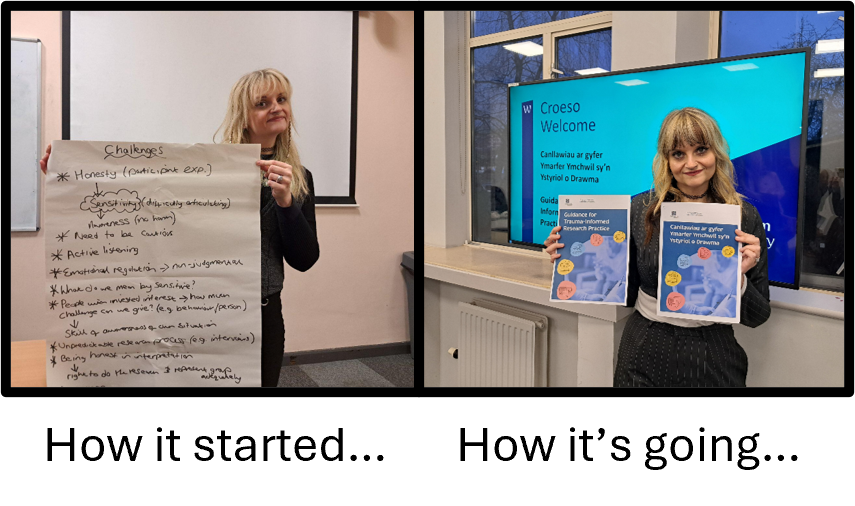
We’re pleased to share the Trauma-Informed Research Practice Guidance, developed by Dr Tegan Brierley-Sollis and Wrexham University in collaboration with ACE Hub Wales and Public Health Wales.
The guidance published by Wrexham University supports researchers and organisations to embed trauma-informed approaches into every stage of research. It includes practical advice on supportive research culture, trauma-informed language to protect wellbeing of participants, decompression techniques for researchers and key considerations for delivering research safely and ethically.
It aims to offer support for those involved in research activity and is split into two parts: the first part is to support the research process in being trauma-informed for participants, and the second part is to support the researcher and their wellbeing. Although the document addresses issues broadly, it recognises that structures across establishments may vary and may require adaptation to suit the needs and identity of each organisation.
Guidance for Trauma Informed Research Practice
The Launch Event
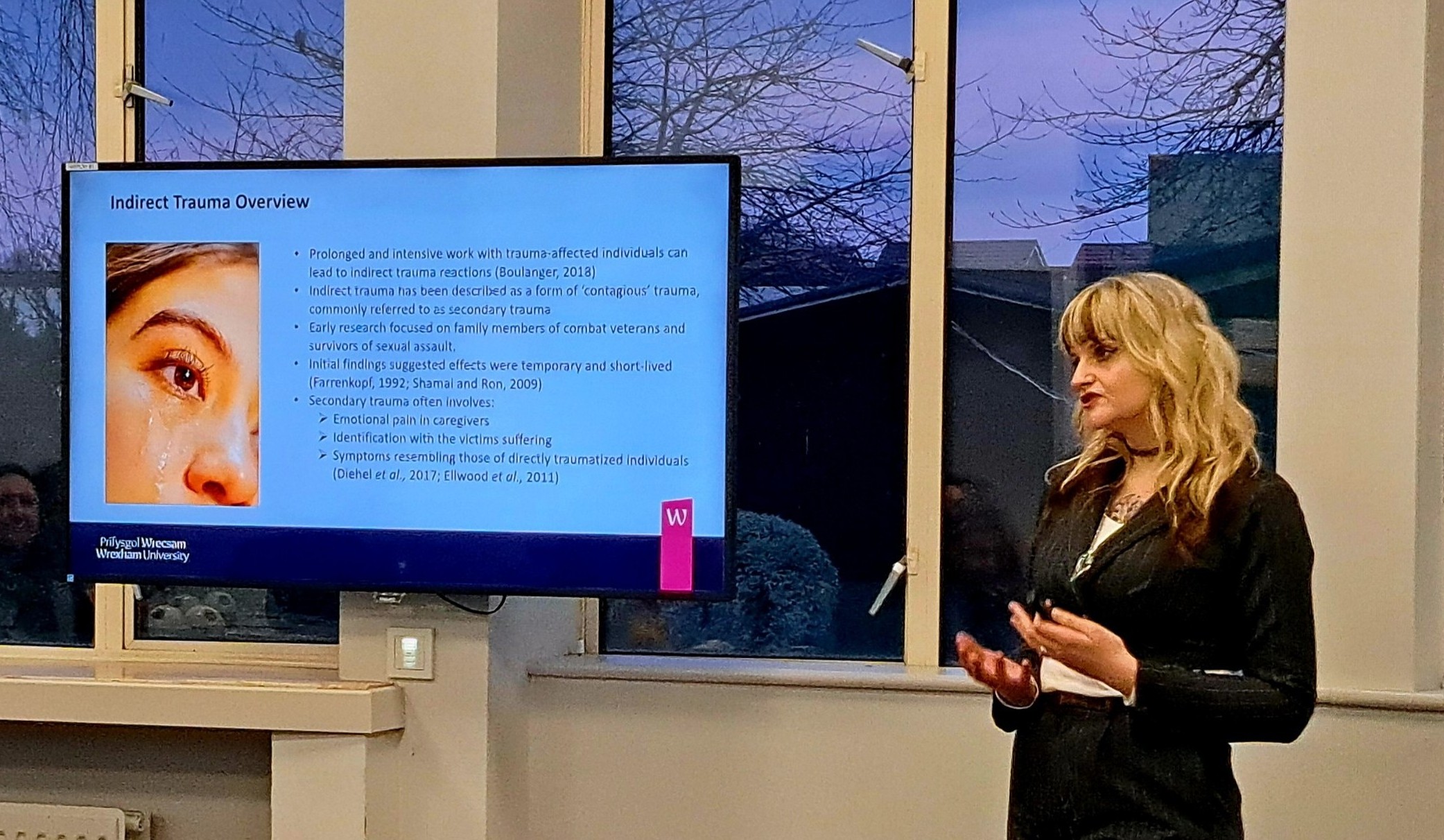
Frances Thomason, Head of Research Services, opened by outlining our commitment to the principles of the Researcher Development Concordat. Fran thoughtfully discusses the collaboration necessary to get to this point; interdisciplinary across departments and working with external organisations, such as the brilliant ACE Hub Wales.
Dr Jo Hopkins, Programme Director in Adverse Childhood Experiences, Criminal Justice & Violence Prevention at ACE Hub Wales, and Visiting Professor at Wrexham University, presented a recorded video at the launch. Jo discussed the TrACE Informed Organisations Toolkit and how the guidance is a great example of additional resources that are more thematic and can be offered as part of the toolkit.
Dr Tegan Brierley-Sollis led this initiative that stemmed from the Researcher Development Concordat. Through collaboration, consultations, and research culture cafés, this guidance was developed through respectful and trusting relationships inside and outside the university.
It will support researchers and organisations to embed trauma-informed approaches into every stage of research. It includes practical advice on supportive research culture, trauma-informed language to protect wellbeing of participants, decompression techniques for researchers, and key considerations for delivering research safely and ethically.