From Apprentice to Award-Winner: How a Degree Apprenticeship Shaped Alex’s Career
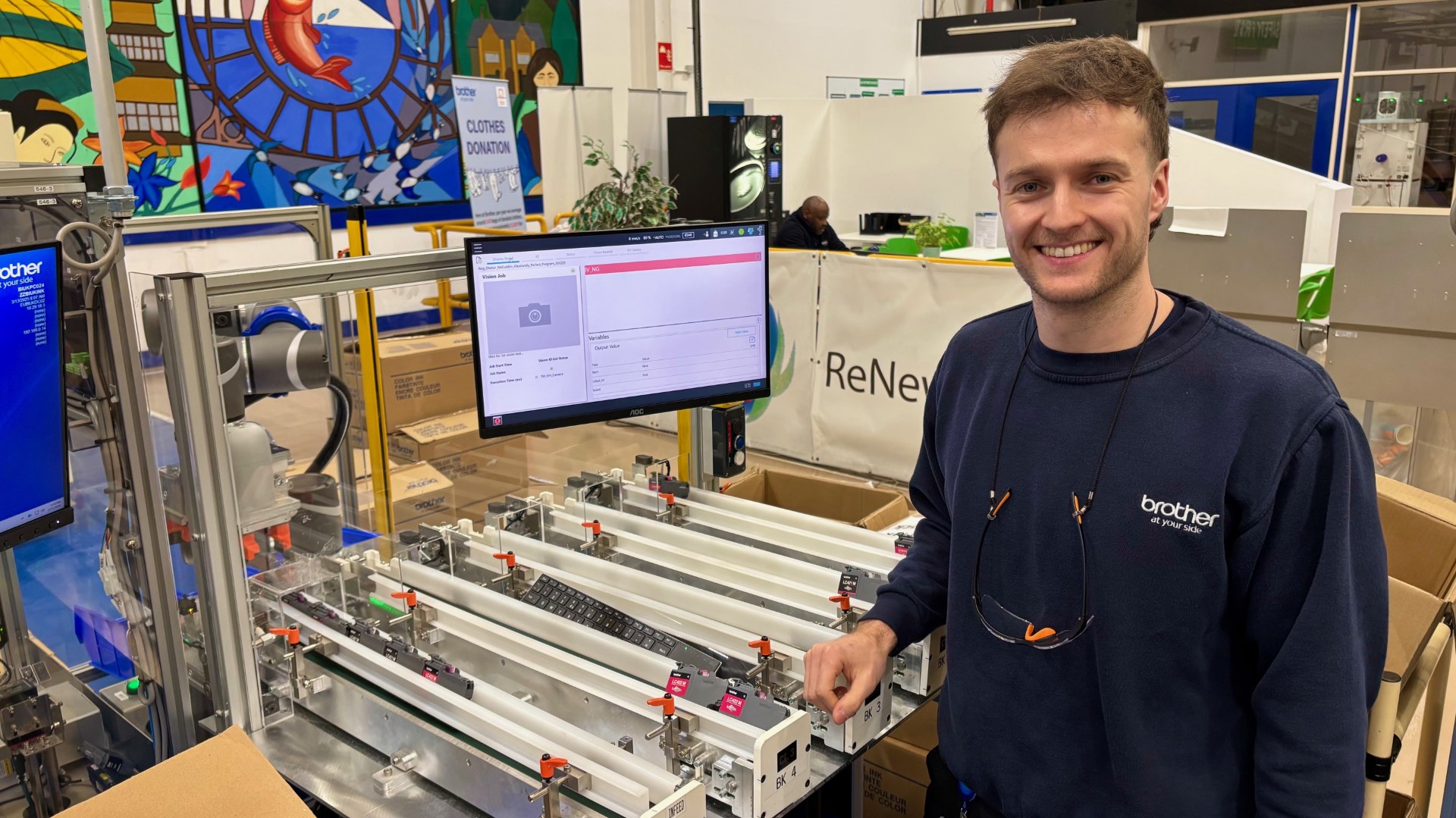
At Wrexham University, our degree apprenticeships combine academic study with real-world industry experience, giving students the skills and confidence to progress quickly in their careers.
We caught up with Alex to hear about his journey from beginning his career on the production line to progressing into a production engineering role focused on robotics, automation, and continuous improvement at Brother Industries (UK) Ltd.
Q&A with Alex
What course(s) did you study and when did you graduate from Wrexham University?
I studied BEng (Hons) Production Engineering at Wrexham University as part of a degree apprenticeship programme.
Where do you work and what is your current job title?
I currently work at Brother Industries (UK) Ltd as a Production Engineer. My role has a strong focus on robotics, automation, and continuous improvement within manufacturing operations.
What made you choose to study at Wrexham University?
I chose Wrexham University due to its strong partnership model between employer and university, as well as its accessible location and funded apprenticeship route. The opportunity to combine academic study with full-time employment was particularly appealing, as it allowed me to apply theoretical knowledge directly within an industrial environment from the outset.
Can you tell us more about the apprenticeship journey you followed?
I began my career on the production line with no prior real-world engineering experience. The degree apprenticeship provided a structured pathway to develop both technical knowledge and practical skills simultaneously.
Throughout the programme, I studied a broad range of modules covering manufacturing processes, design, mechatronics, electrical, and production management. This academic foundation enabled me to progressively take on greater responsibility within the business.
By combining hands-on experience with structured learning, I developed practical competence in production operations, quality systems, technical problem-solving, and automation projects. The ability to immediately apply university learning within the workplace significantly accelerated my professional development.
Can you talk us through your career journey since leaving Wrexham University?
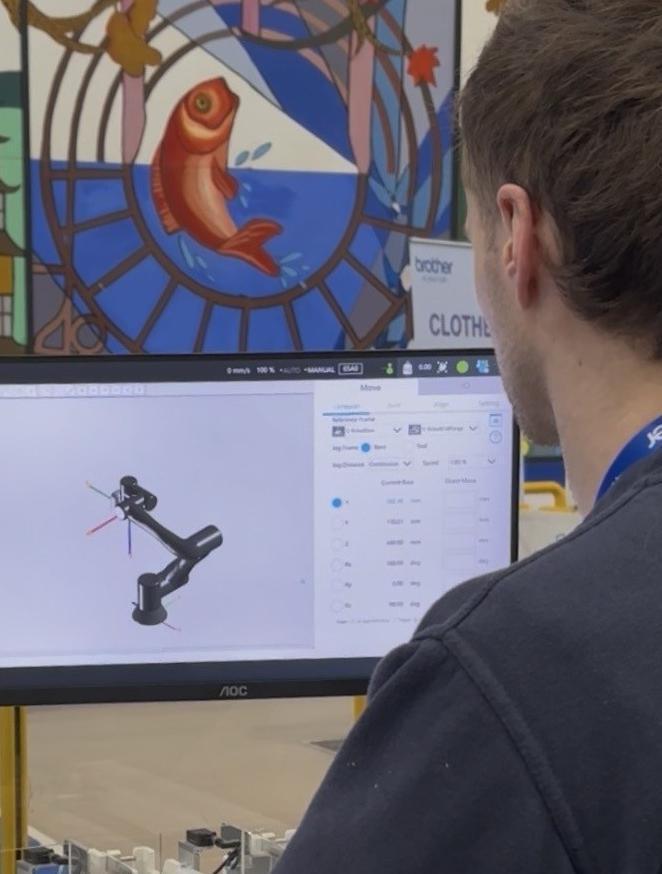
Since graduating, I have progressed into a full-time Production Engineering role at Brother Industries (UK) Ltd. My work has increasingly focused on automation strategy and the implementation of robotic systems within manufacturing.
I have been involved in projects aimed at improving productivity, reducing operational costs, and enhancing process reliability through the integration of robotics and lean methodologies. This transition reflects the strong foundation built during my apprenticeship.
What are your main responsibilities in your current role?
My primary responsibilities centre around driving lean, efficient production operations. This includes:
- Identifying and delivering cost-saving initiatives
- Improving process capability and reliability
- Supporting automation and robotics implementation
- Analysing production performance data
- Contributing to long-term operational strategy
A key aspect of my role is ensuring that engineering solutions are practical, sustainable, and aligned with business objectives.
Do you have any fun or interesting facts you would like to share about your role or career?
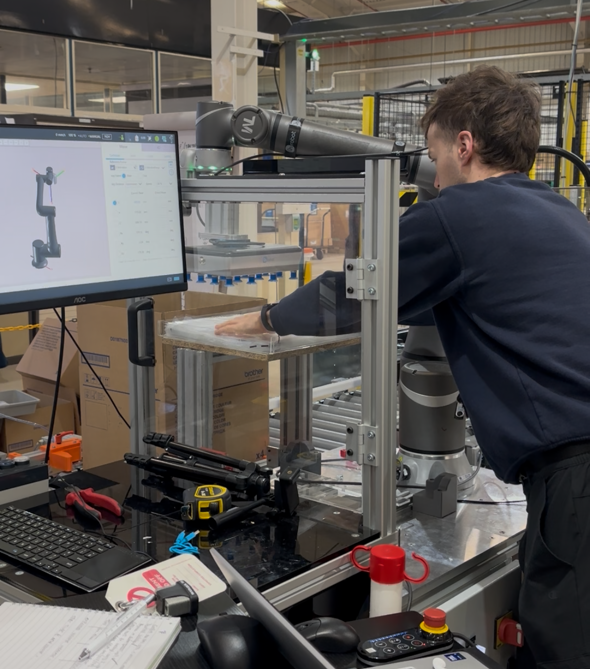
The breadth of knowledge gained during my degree apprenticeship has allowed me to contribute to a wide variety of projects. I have worked on initiatives ranging from manning optimisation and production planning to mechanical design, programming, and robotics implementation.
The variety keeps the role engaging, as no two projects are the same and each requires a different blend of analytical and practical skills.
How did your studies play a part in shaping your professional path?
The diverse range of modules studied during my degree was instrumental in shaping my career direction. Exposure to areas such as mechanical design, electrical systems, 3D printing, programming, robotics, and production engineering provided a well-rounded understanding of manufacturing systems.
This multidisciplinary foundation has been particularly valuable in automation projects, where mechanical, electrical, and software elements must integrate seamlessly.
Have you won any awards or recognition during or since graduating from Wrexham University?
I was awarded the iMechE Project Prize in recognition of a project focused on improving efficiency, reducing lead time, and lowering costs within a remanufacturing operation.
The project applied lean principles and automation concepts to deliver measurable performance improvements, and the award was a valuable acknowledgment of the practical impact of my work.
Reflecting on your experience at Wrexham University, can you tell us the ways in which you developed personally or professionally during your studies, and how those changes influenced your life or career since graduating?
Studying alongside individuals from different industries, organisations, and career stages broadened my perspective on the diverse opportunities available within engineering.
Professionally, I developed stronger analytical thinking, communication skills, and confidence in presenting technical concepts. Personally, the discipline required to balance full-time employment with academic study strengthened my time management and resilience.
These qualities have continued to influence my career, particularly when leading projects or contributing to cross-functional initiatives.
What advice would you give to someone considering studying at Wrexham University?
I would advise prospective students to focus not only on understanding the theory but also on actively developing practical skills; particularly in design, electrical systems, and programming. These disciplines consistently arise in modern manufacturing environments, especially as automation and digital technologies become more prominent.
Building confidence in these areas early on will make long-term career progression significantly smoother.
Most importantly, make the most of the opportunity to apply what you learn in real-world situations as this is where the true value of a degree apprenticeship lies.
Alex’s story shows how a degree apprenticeship at Wrexham University can open doors to a wide range of engineering opportunities. By combining hands-on experience with academic study, students gain the skills, knowledge, and confidence to take on challenging roles and make a real impact in industry.
If you’re considering a career in engineering, explore our degree apprenticeships or come to one of our Open Days to tour our facilities, meet lecturers, and speak with current students about studying here.