Publication of the Month, March
Near-peer led simulation and pedagogical labour in paediatric nursing education: A critical review
Our March Publication of the Month highlights new research from Wrexham University exploring how simulation can support the next generation of paediatric nurses.
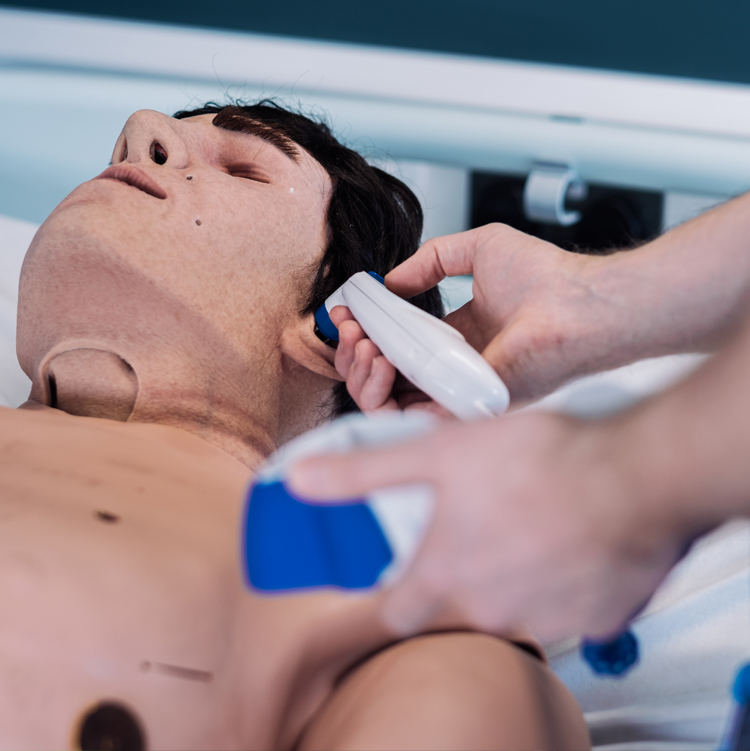
In their article, Dr David Crighton and Lisa Harvey examine the growing use of near-peer led simulation in nursing education. This approach involves more experienced students facilitating simulation sessions for students earlier in their programme, creating opportunities to practise clinical scenarios in a safe and supportive learning environment.
Simulation has become increasingly important in nursing programmes. Clinical placements do not always provide consistent exposure to complex or high-pressure situations, particularly in paediatric care where emotional and relational skills are essential. Simulation allows students to rehearse these experiences, helping them build confidence, develop clinical reasoning, and reflect on their practice before entering real clinical settings.
The review highlights several benefits of near-peer led simulation. Learning with peers can create a less intimidating environment, encouraging open discussion and reflective practice. Students who act as facilitators also gain valuable experience in leadership, communication, and teaching – all skills that support their development as healthcare professionals.
However, the authors also argue that these approaches require careful support. Running effective simulation sessions involves preparation, training, and emotional labour from both staff and student facilitators. Without proper recognition and resourcing, this work risks becoming invisible within university systems.
Drawing on the work of sociologist Stephen Ball, the article also reflects on the wider pressures facing universities, where success is often measured through metrics such as student satisfaction and employability outcomes. In this context, important aspects of learning – including confidence, belonging, and reflective practice – can be harder to capture and therefore easier to overlook.
The paper concludes that near-peer led simulation has significant potential to enhance paediatric nursing education, but its long-term success will depend on how institutions recognise and support the relational and emotional work involved in teaching and learning.