Wrexham University Hosts the 15th Annual Welsh Centre for Crime and Social Justice Conference
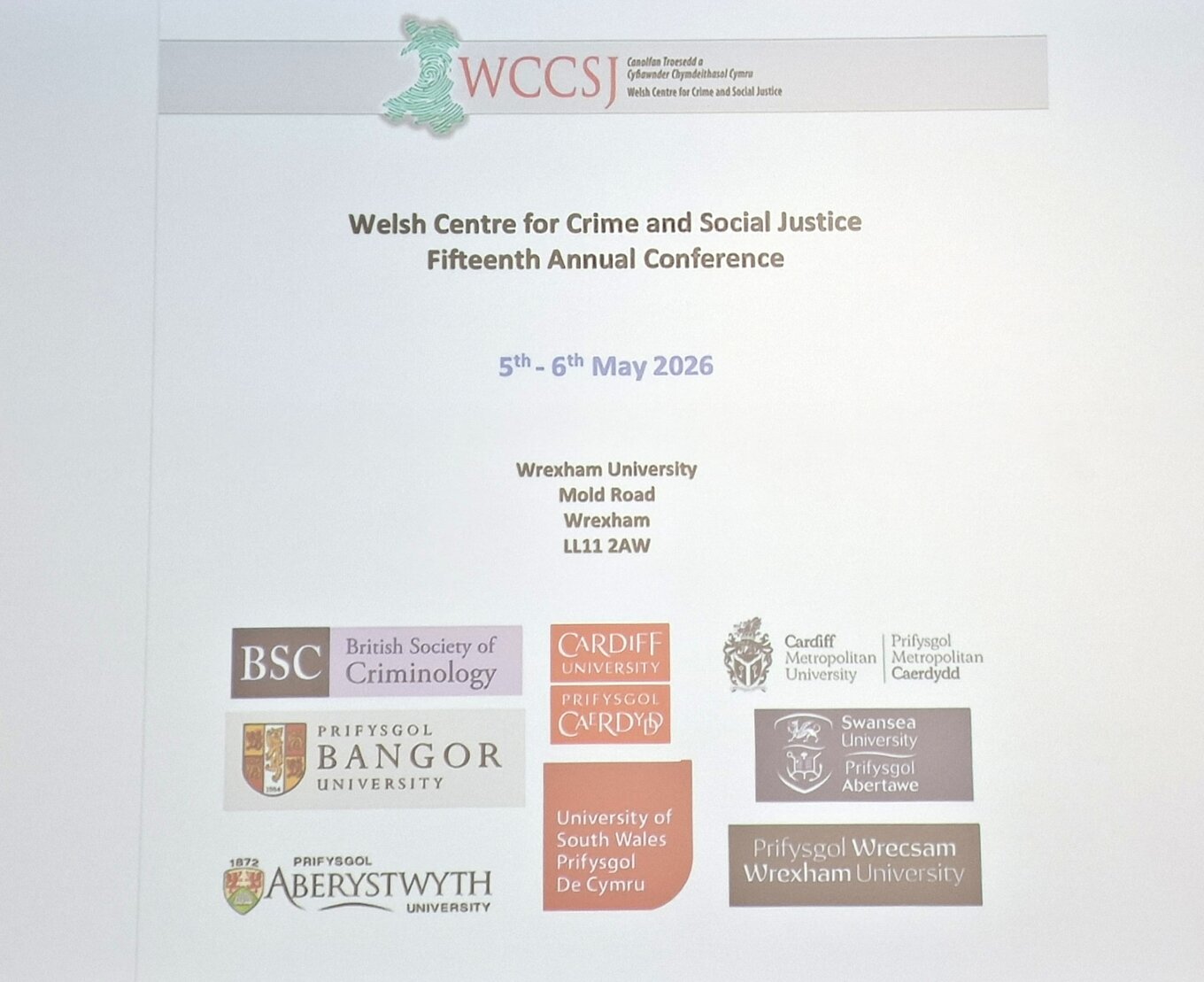
On 5–6 May, staff and researchers from Criminology, Law and Policing at Wrexham University welcomed delegates from across Wales for the 15th Annual Conference of the Welsh Centre for Crime and Social Justice (WCCSJ).
The conference brought together academics, practitioners, postgraduate researchers and policing professionals to explore contemporary issues in criminology, policing, probation, justice, vulnerability, and social harm.
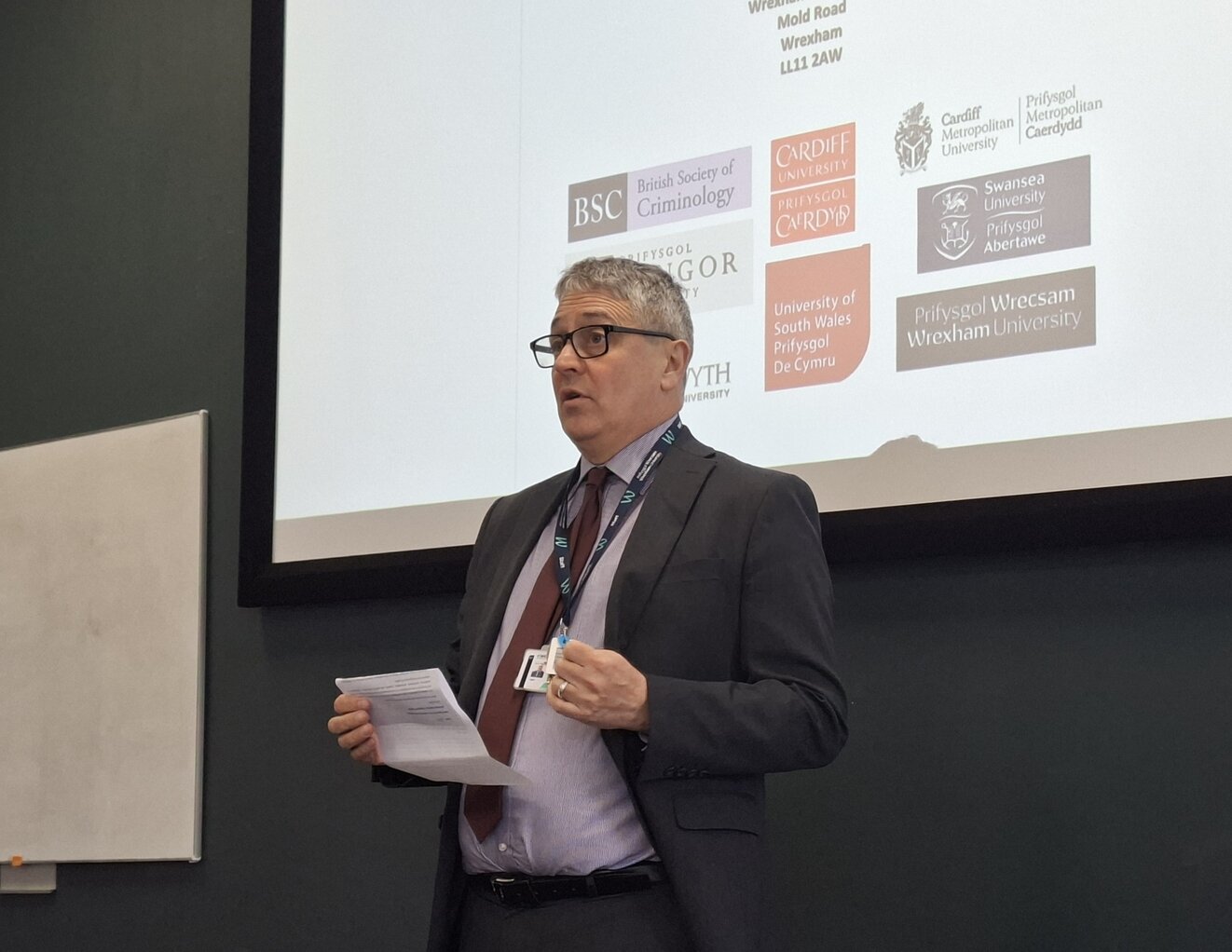
The event opened with welcome addresses from Professor Joe Yates (Vice Chancellor Wrexham University) and Professor Martina Feilzer (Director of the WCCSJ), who introduced the conference theme and reflected on the importance of using evidence and research to challenge existing systems constructively and develop new ways of thinking.
Reimagining probation and community justice
The opening plenary, chaired by Dr Zoe Cross (Deputy Director of WCCSJ), featured Professor Mike Maguire from the University of South Wales and Professor Kate Williams from Aberystwyth University (Deputy Director of WCCSJ), who discussed the “Grand Avenues” project exploring new models of probation in the community.
The ten-year project focused on strengths-based and community-led approaches to probation supervision, encouraging partnership working with local organisations, supporting family connections, and reducing social exclusion. Speakers reflected on both the successes and challenges of embedding probation services within local communities, highlighting improved relationships, greater engagement, and stronger reintegration outcomes for people on probation.
Rural policing, organised crime, and vulnerability
Parallel sessions throughout the conference explored a wide range of topics. In a session on rural policing, Alicia Edwards from Bangor University (Coordinator for WCCSJ) presented emerging findings on organised agricultural crime in rural Wales, drawing on observations with the North Wales Police Rural Crime Unit and interviews with rural policing professionals.
Demi John from Aberystwyth University explored vulnerability and discretion in rural response policing through ethnographic research informed by their own experiences as a Special Constable.
Meanwhile, Dr Kathy Hampson examined police attitudes towards children involved in county lines drug dealing, discussing the ongoing shift from criminalisation towards recognising vulnerability and exploitation.
Youth justice, trauma, and ethical research
Sessions on youth justice highlighted trauma-informed and reflexive approaches to research and practice.
Dr Hannah John-Evans and Dr Caroline Huskins discussed enhanced case management and collaborative working within youth justice services.
Katrina Jones from the University of South Wales reflected on reflexivity, positionality and ethical practice in youth justice research, particularly when working within highly complex and emotionally charged environments.
Dr Tegan Brierley-Sollis from Wrexham University presented research on trauma, attachment, and co-regulation in youth justice settings, emphasising the importance of emotionally attuned practitioner relationships and the potential impact of trauma-informed approaches on children and practitioners.
Substance use, domestic abuse, and lived experience
Day two opened with presentations from Professor Katy Holloway, Dr Marian Buhociu, and Dr Shannan Murray from the University of South Wales, who shared ongoing work relating to substance use, harm reduction, and public involvement in research across Wales.
Further sessions focused on domestic abuse and intimate partner violence. Diana Fologea presented early findings from research evaluating whole-family responses to domestic abuse in Wales.
Gemma Lunt from Wrexham University explored the impact of the Domestic Abuse Act on responses to non-fatal strangulation, while Helena Barlow discussed women’s lived experiences of ex-partner stalking and the long-term impacts on wellbeing and family life.

Bringing together researchers and practitioners across Wales
Alongside keynote talks and parallel sessions, delegates had opportunities to network with colleagues from across Wales and engage with invited guests from North Wales Police.
The conference highlighted the breadth of criminology, policing, and justice research currently taking place across Wales, while also providing a supportive and collaborative environment for postgraduate researchers and early-career academics to share their work.
Wrexham University would like to thank the Welsh Centre for Crime and Social Justice for choosing Wrexham as the host venue for this year’s conference, as well as all keynote speakers, presenters, delegates and invited guests who contributed to the event’s success.