Postgraduate Researchers’ Conference 2026
6-minute read
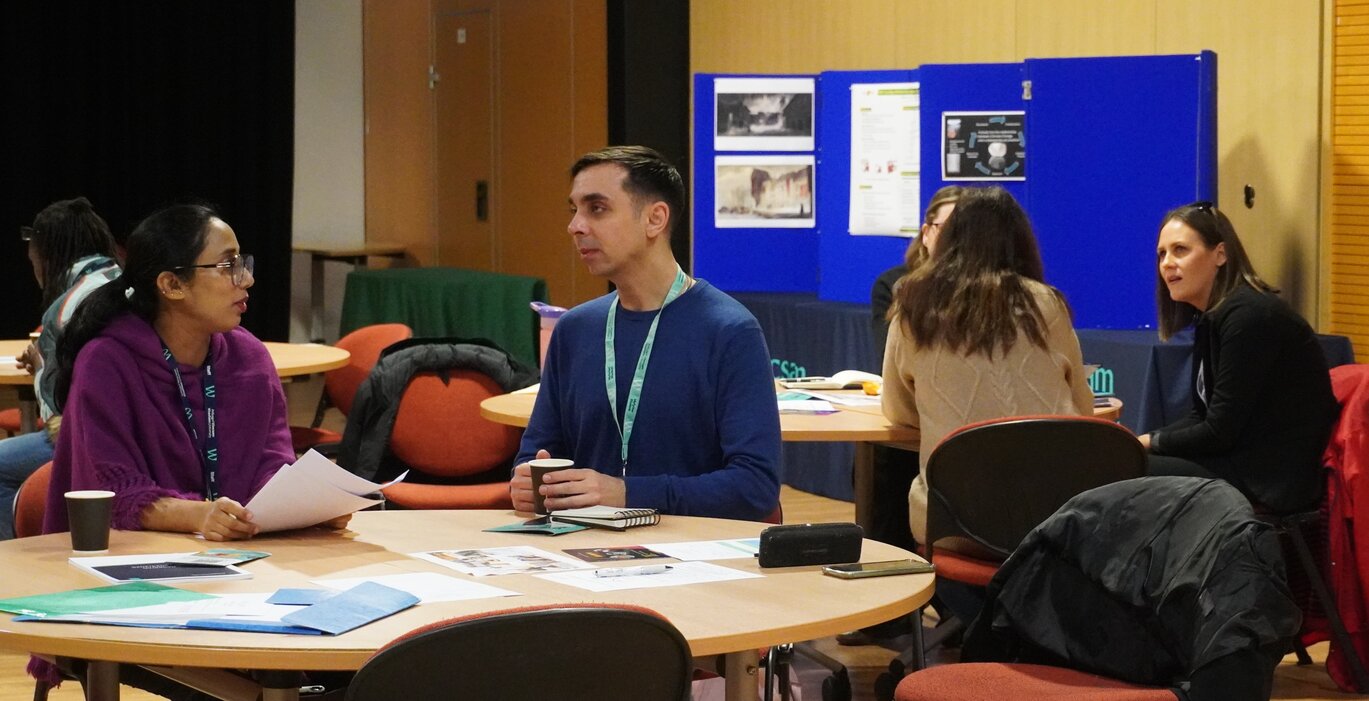
We recently hosted the 2026 Postgraduate Research (PGR) Conference, welcoming our students to a day of networking, learning, and sharing their work. Frances Thomason, Head of Research Services, opened the event and introduced students to a few of our events, such as Open House for Research and Art of Research. Dr Julian Ayres and Hayley Dennis kicked things off with an energetic networking game, encouraging everyone to connect with new people and experience firsthand the importance of building professional relationships at conferences.
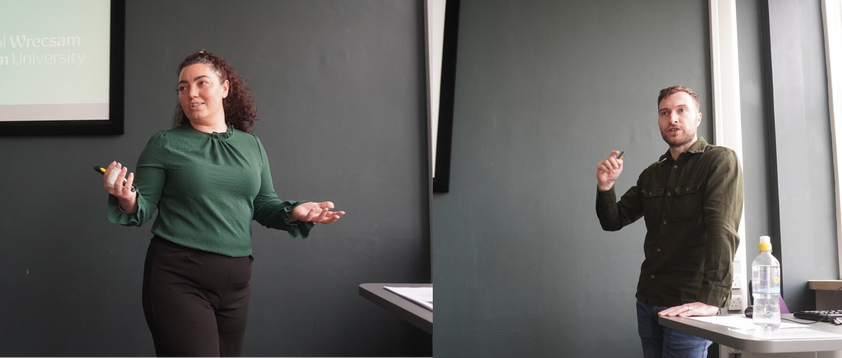
Left to right: Sunaina, Dmitrii, Morgaine
Following this, an RDAPs (Research Degree Awarding Powers) panel convened, chaired by Jayne Rowe, featuring Professor Richard Day, Professor Mandy Robbins, Frances Thomason, and Beth Davies. Students asked about the timing of RDAPs, its impact on current students, and how these developments might elevate the University’s research profile. The panel highlighted that increased scrutiny ensures high standards and strengthens the University’s reputation, offering more security and focus on areas of strategic importance. Looking ahead, our doctoral community is set to expand, with aspirations for growth in professional doctorates and PhDs by publication. As Professor Robbins said, “Being in control of our own destiny” positions the University to support a thriving and visible research community over the next decade.
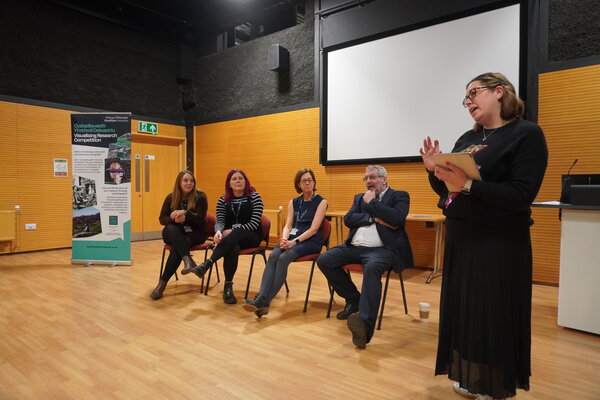
The RDAP panel
Student Presentations
Faculty of Social and Life Sciences
The conference also showcased student research during the parallel sessions in B Corridor. Sara Hilton, Senior Lecturer and first-year PhD student shared work on Wrexham AFC (Association Football Club) and its social impact within the local community. Sara’s research explores how the football club, now globally recognised, acts as a socially embedded institution, with partnerships across the third sector and a reach that bridges local communities, policy agendas, and funders. Using a Bourdieuian lens, Sara examined how different forms of capital—economic, cultural, and symbolic—shape who benefits from club initiatives, highlighting the relational dimensions often overlooked in impact metrics.
 Left to right: Sara Hilton, Aaron Squire
Aaron Squire presented a qualitative study on employer perceptions of people with criminal records. Aaron’s research examined how stigma and risk perceptions can restrict employment opportunities, while also exploring how supportive employment can reduce reoffending and enhance purpose and wellbeing. The study involved interviews with 20 employers and four service providers, identifying barriers such as risk aversion and excessive concern over certain offences, while highlighting the potential for positive change through education and policy adjustments.
Helena Barlow discussed research on women’s experiences of ex-partner stalking, combining interviews with women and practitioners to uncover hidden patterns of fear, responsibility, and social norms that enable stalking. Helena’s findings emphasised the enduring impact of trauma and the importance of reflective practice, showing how professional identity and personal experience intersect in social work responses.
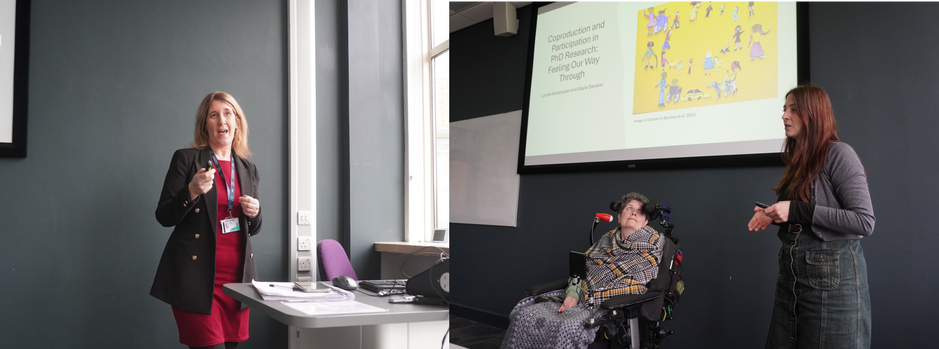 Left to right: Helena Barlow, Gayle Davison & Louise Bosanquet
Louise Bosanquet, a third-year PhD student, presented her co-productive research working with the lived experience focus group Outside In, which includes service users and carers. Members of the group contributed their expertise to help shape Louise’s research and support the social work education. This collaborative approach fostered a sense of inclusion and camaraderie, giving participants meaningful involvement in the research process and highlighting the value of lived experience in informing education and practice.
Faculty of Arts, Computing and Engineering
First out of the starting blocks for the Faculty Arts, Computing, and Engineering (FACE) afternoon session was Elena Cassidy-Smith with her presentation My shadow walks beside me - research in progress, a practice-based visual arts enquiry into time and spatial existence. Elena’s research, which encompasses the creation of artwork as part of her journey, explores the concept of time; the passage of time, how it feels, what it is, the concept of slow time, and theories around externalism and presentism. A really thought-provoking topic.
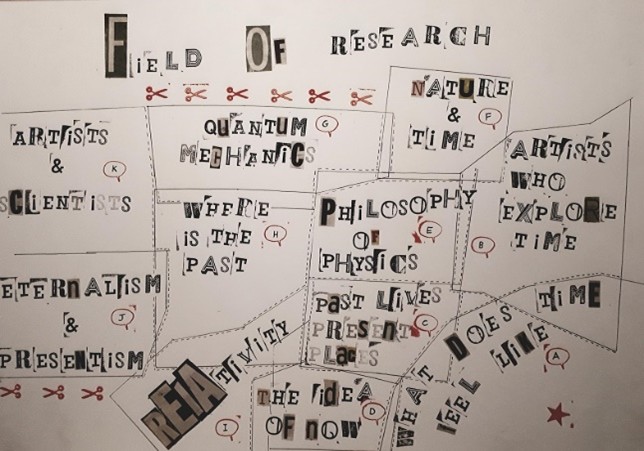
Elena's work
Dmitrii Iarovoi then talked us through his experience of using impact planning as part of his PhD journey. The session was titled Co‑creation for cultural futures: how impact planning shapes AI heritage research. Dmitrii touched on the impact planning tools used, the fresh perspectives gained, and how the exercise helped him prepare for and successfully engage with an external interested party. Dmitrii provided great insight and top tips for fellow students on how effective planning can support impact beyond academia.
Up next was Robert Tracey on Dynamic routing of data based on resource availability and benefit. In accessible terms, which will not do the research due justice, Robert has created a framework that identifies the best cluster or single node (computing) to run jobs on within an organisation. It gathers data in real time, adapts to users’ needs and supports resource efficiency. A key nugget of information shared in the session was how some elements of the framework are based on nature, such as how scout bees find potential sources and return to the hive and do a ‘waggle’ dance - the better the source, the better the dance!
Finally, was Gbenga Akinyemi on Methodologies in Opinion Mining and Emotional Analysis Research: Focusing on Lyrical Sentiments. Gbenga’s research explores developmental trends in lexicon resource tools, and how they are being applied in lyrical and textual sentiment analysis. He explained that a lexicon is a collective of words with sentiment values attached. Gbenga has undertaken analytical research of various lexicon resources to create an evidence matrix that can then be used as part of his lyrical sentiment analysis.
Thank you to all of our FACE PhD students for fascinating insights into your research.
Posters, Creative Format, and Flash Talks
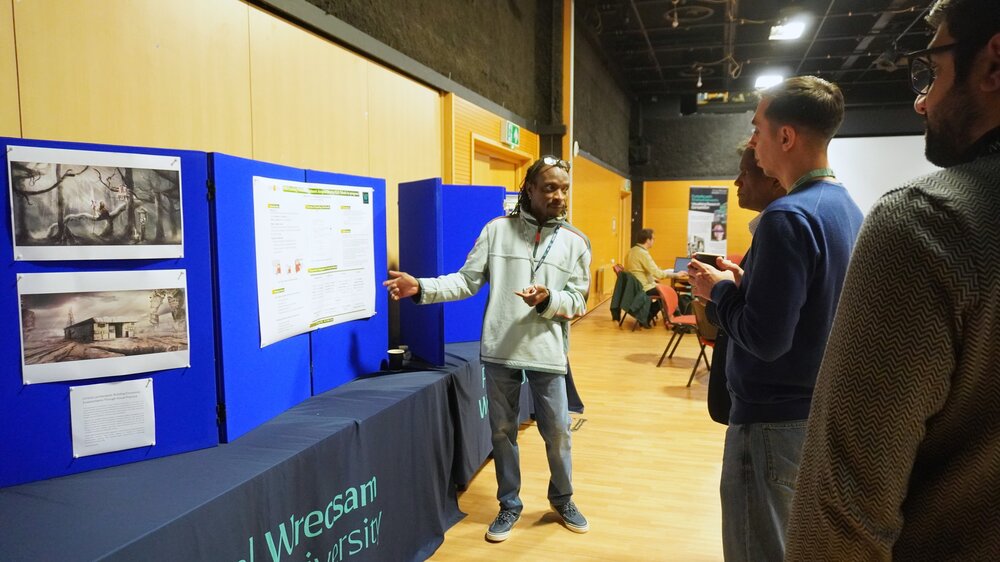
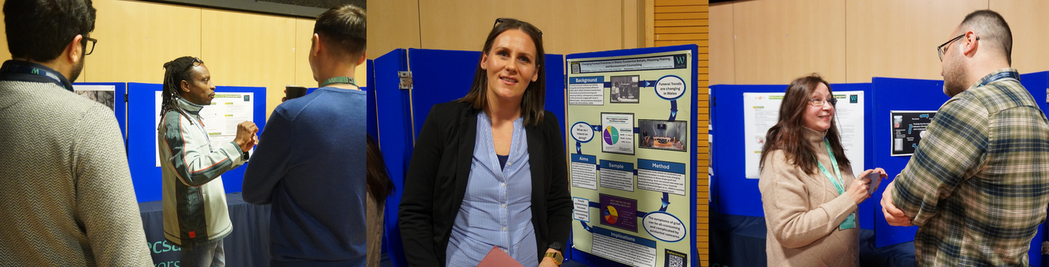 Left to right: Adekunle Oladiji, Morgaine Jeffreys-Evans, Viktoriia Iarovoa
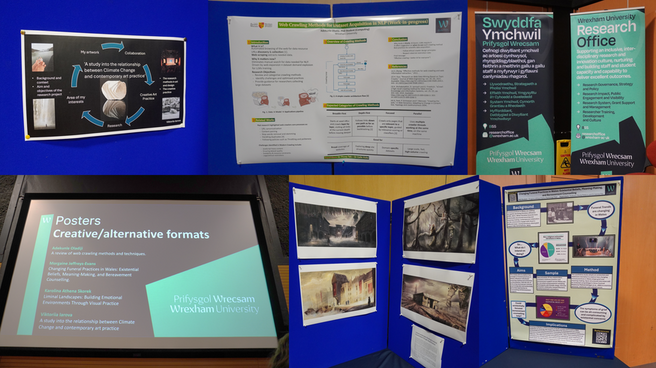
The conference also featured a poster and creative format session, showcasing a range of innovative work. Karolina Skorek displayed artwork exploring Liminal Landscapes: Building Emotional Environments Through Visual Practice, Adekunle Oladiji presented a poster on web crawling methods and techniques, Morgaine Jeffreys-Evans shared research on changing funeral practices in Wales, and Viktoriia Iarovoi presented a creative poster examining art and climate change. This session highlighted the diverse approaches and formats our researchers use to communicate their work, from visual art to interactive and creative presentations.
The conference also featured flash talks, including Liz Broom’s exploration of thinking processes, cognitive flexibility, and stress management, and Emma King’s work on using arts-based methods to inform trauma-informed approaches within BCUHB. Emma’s creative interventions aim to support wellbeing, enhance preventative methods such as social prescribing, and offer innovative solutions to organisational challenges.
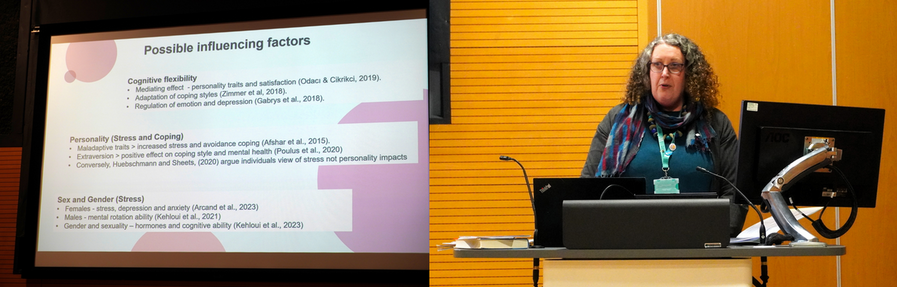 Left to right: Liz Broom's presentation slide, Emma King
Overall, PGR Conference 2026 highlighted the breadth and depth of postgraduate research across disciplines. From community impact and social justice to innovative teaching, arts-informed health interventions, and creative explorations in visual and digital formats, our students demonstrated curiosity, collaboration, and the practical application of research to societal challenges. The poster and creative session, featuring artwork, studies on large language models, changing funeral practices in Wales, and climate-focused art projects, further showcased the innovative ways our researchers communicate and engage with diverse audiences.