BEng (Hons) Motorsport Engineering
Course details
UCAS Code
H330
Year of entry
Sept 2027
Duration
3 YRS (FT)
UCAS Tariff
96-112
Institution Code
G53
Location
Wrexham
Why choose this course?
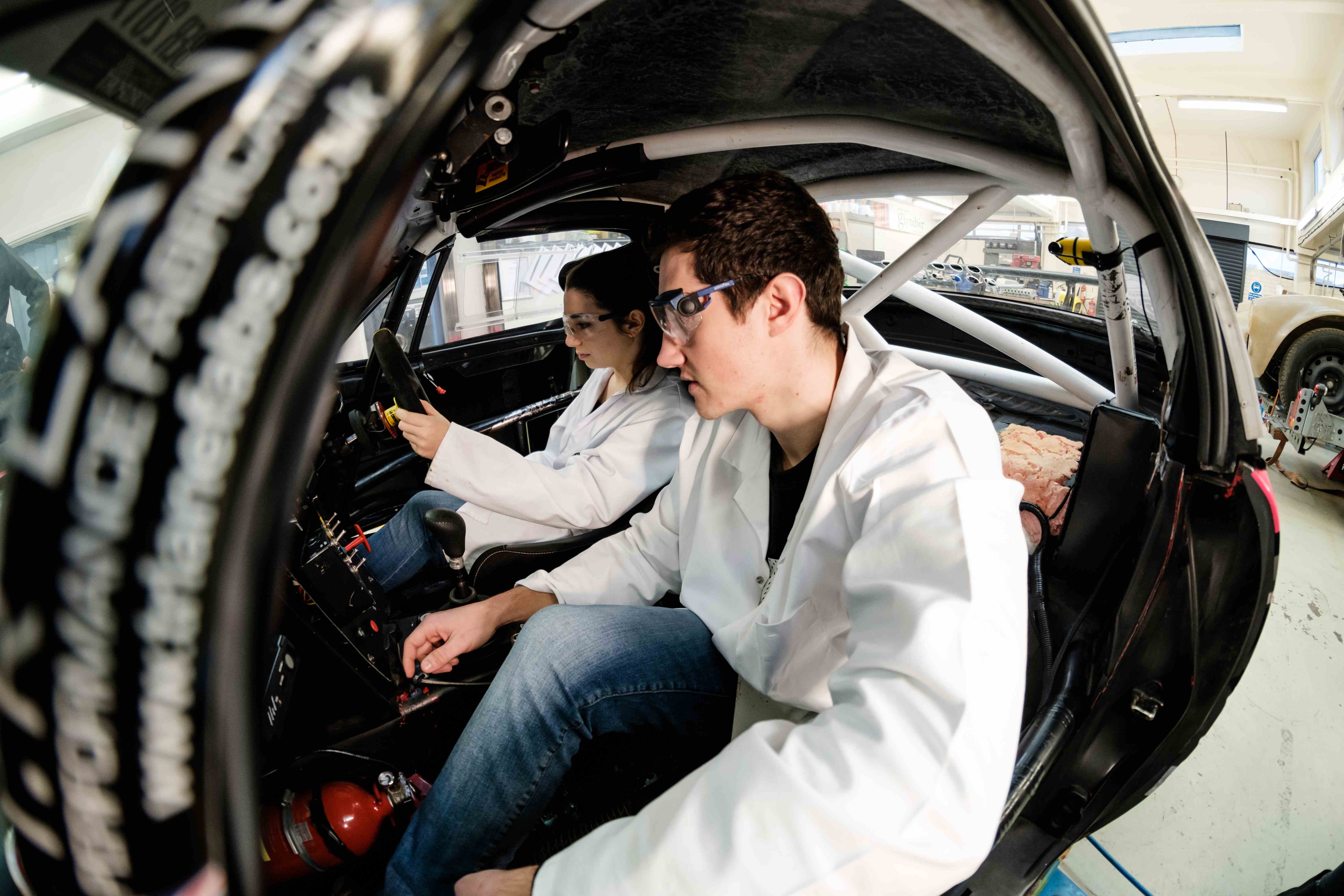
The BEng (Hons) Motorsport Engineering blends theory with hands-on practice to prepare you for careers in motorsport and high-performance engineering. With no formal exams, industry-standard facilities, and real-world projects, you’ll graduate career-ready with the skills to excel in a fast-paced global sector.
You will
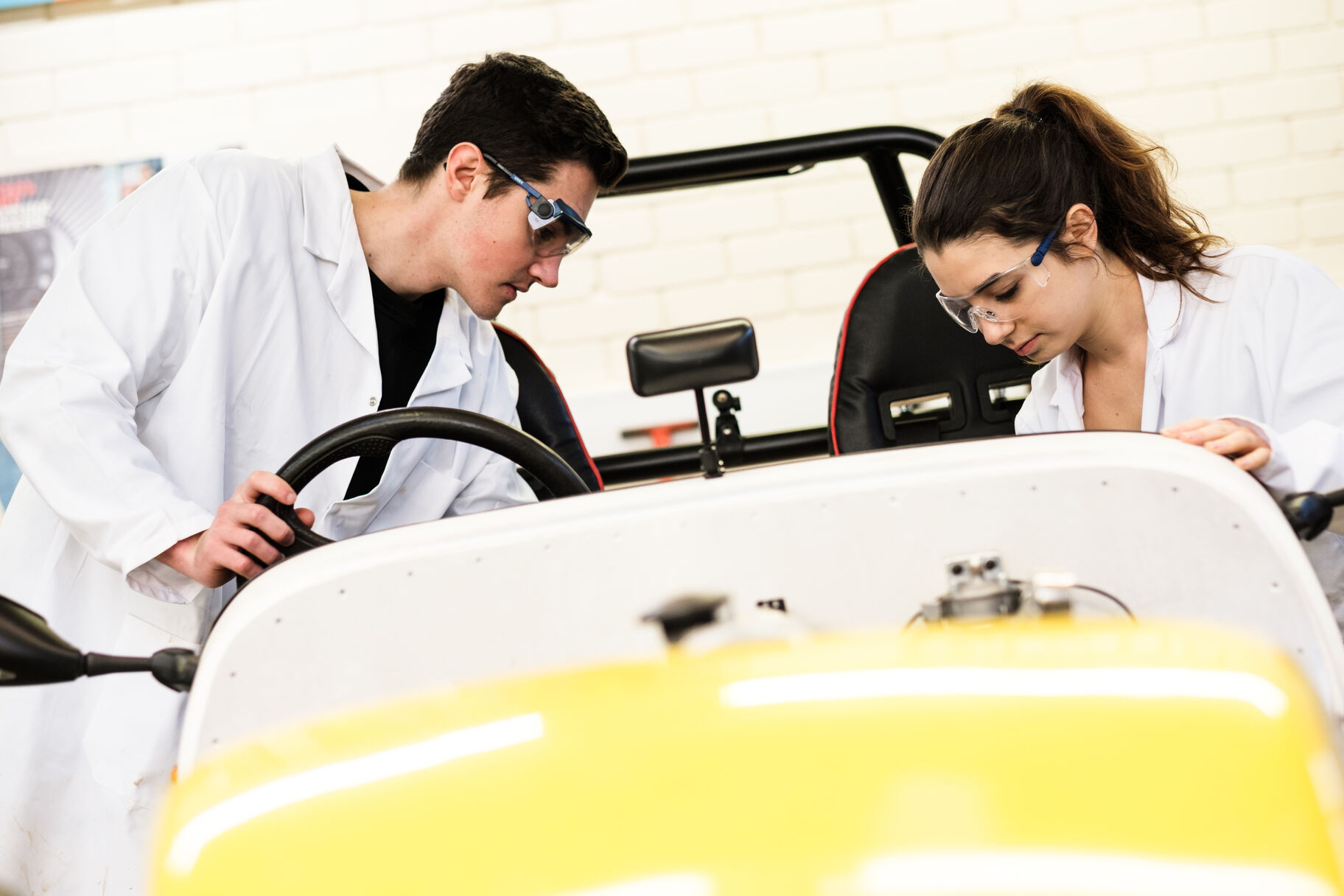
- Gain hands-on experience with industry-standard tools, workshop equipment, and advanced simulation software
- Learn from strong employer engagement, industrial input, and opportunities that reflect sector expectations
- Have the opportunity to work on team-based design projects that replicate the real-world challenges faced by motorsport engineers, allowing you to gain practical experience that directly prepares you for a career in high-performance engineering
- Benefit from hands-on assessments like labs and projects, replacing traditional exams with real-world learning experiences to prepare you for industry
- Tailor your final-year project to match your ambitions, with opportunities to specialise in motorsport performance, data, or innovative technologies
- Learn to use CAD/CAM integration and digital manufacturing techniques, building practical design-to-manufacture expertise that employers value
- Have the opportunity to progress into various roles upon graduating, including Race Engineer, Vehicle Dynamics Engineer, Aerodynamics Engineer, Motorsport Data Analyst, Motorsport Innovation Specialist, and more
Did you know?
By studying a Motorsport Engineering degree at Wrexham University, you'll gain access to unique benefits designed to help you succeed…
Key course features
- This course is designed in line with the AHEP-4 framework, ensuring alignment with professional engineering expectations
- Build practical design-to-manufacture skills through CAD/CAM integration and digital manufacturing techniques
- In your final year, you will undertake an individual project often linked directly to motorsport performance, data, or innovation
- Enhance your final year with a professional placement, embedded within the professional practice module. Lasting up to 12 weeks in Semester 2, this valuable opportunity allows you to gain real-world industry experience, strengthen your CV, and build professional networks before graduation
What you will study
Year 1 (Level 4)
In year one, you will develop a strong foundation in core engineering principles through modules such as engineering maths. Practical engineering skills will give you hands-on experience and confidence in using digital tools and workshop equipment.
Modules:
- Engineering maths: To provide a foundation of mathematical knowledge and develop the application of mathematical principles in the solution of engineering problems, including use of computer modelling software.
- Core engineering skills and application: This module combines conceptual teaching with guided practical work to strengthen your understanding of fundamental principles. You will explore how theoretical knowledge connects with real-world practice through structured experimentation and applied tasks. It provides the core skills and knowledge for a foundation in engineering.
- Fundamentals of motorsport engineering: You will learn the engineering principles underpinning motorsport vehicles, combining theoretical understanding with practical measurement activities to develop technical awareness, analytical thinking, and preparation for higher-level motorsport engineering study.
- Engineering design and CAD: You will be encouraged to experiment, reflect, and draw connections between observed results and underlying principles. This module develops your ability to apply engineering design principles using industry-standard CAD tools and engineering design methodologies, to help create precise 2D drawings and 3D models while integrating theory with practical design applications.
- Engineering materials and processes: You will learn the principles of engineering materials and manufacturing processes by introducing different types of materials, their properties and manufacturing processes, to enable informed and sustainable material selection for real world engineering solutions.
- Practical engineering skills: You will get involved in applied investigations that show the relationship between ideas and outcomes, developing observational, measurement, and evaluative skills. Through practical exploration, you will learn core concepts and their relevance to professional environments. This module develops essential practical engineering skills through hands-on workshop and laboratory activities.
Year 2 (Level 5)
In year two, the integration of design and manufacturing techniques is supported through design to manufacture (CAD/CAM), while the engineering design project provides an opportunity to work in teams on motorsport-focused challenges, which apply to real-world scenarios.
Modules:
- Mechanical design and analysis: You will learn through a balance of theory and practice and undertake both classroom study and supervised practical activity to explore design, implementation, and evaluation processes. Collaborative work and enquiry-based learning will give you the confidence to apply problem-solving techniques.
- Chassis and Suspension Design: You will analyse, measure, and design chassis and suspension systems for motorsport applications, combining analytical methods with practical investigation to support progression to advanced Level 6 vehicle dynamics modules.
- Design to manufacture (CAD/CAM): A practice-driven learning experience where you will apply theoretical understanding through continuous experimentation and reflection. This module develops practical and theoretical understanding of Computer-Aided Manufacturing (CAM) within an industrial engineering context, where you will design, manufacture, and reverse-engineer components using industry-standard CAD/CAM workflows. There will be hands-on experience with CNC machining, additive manufacturing (3D printing), and 3D scanning technologies.
- Motorsport performance and Aerodynamics: You will develop an analytical understanding of motorsport vehicle performance and aerodynamics, linking mechanical grip and aerodynamic effects to measurable performance outcomes. This will prepare you for advanced Level 6 analytical work.
- Engineering design project: You will enhance your technical proficiency and analytical reasoning by carrying out investigations, recording data, and interpreting outcomes. The emphasis on active exploration is preparation for independent and specialised study at the next level. This module enables you to design, develop, and implement a solution to a partially defined engineering problem.
Year 3 (Level 6)
In year three, you will focus on advanced motorsport topics. The course concludes with a substantial individual project, often aligned to motorsport performance, data analysis, or design optimisation, demonstrating your technical ability and readiness for industry or further study.
Modules:
- Mechanical modelling and simulation: In this module, knowledge is demonstrated through independent investigation and experimentation. You will plan, implement, and analyse practical work to address defined challenges, showing mastery of specialist techniques which drives confidence in leading complex projects. It equips you with the advanced knowledge and practical skills required to apply sophisticated modelling techniques to analyse, evaluate, and solve complex engineering problems.
- Motorsport innovation and sustainability: You will evaluate and justify innovative motorsport engineering solutions by balancing performance, sustainability requirements, and professional responsibility.
- Powertrain analysis and integration: This module will develop your ability to analyse, integrate, and justify motorsport powertrain systems by linking performance, efficiency, diagnostics, and packaging constraints within a professional engineering context.
- Professional practice: This module is delivered through a complex engineering project that fosters creativity, innovation, and the development of business awareness. You will learn to understand their impact and position within industry and society
- Project: You will design and execute experiments or technical tasks that test and refine complex theories. This module will teach you to apply and extend the knowledge acquired in taught modules through the completion of a professional engineering project. In doing so, it develops practical engineering skills, research capability, and industry-relevant experience, preparing students for progression into professional practice.
NOTE: Please note that this programme is currently subject to validation. Course content, structure, and module titles may be subject to change prior to final approval
The information listed in this section is an overview of the academic content of the programme that will take the form of either core or option modules. Modules are designated as core or option in accordance with professional body requirements and internal academic framework review, so may be subject to change.
Entry requirements & applying
The academic requirements for the course are 96-112 UCAS tariff points at GCE A-level or equivalent, including Maths or Physics.
Teaching & Assessment
Our teaching approach is designed to be flexible, engaging, and focused on your success. Learning is delivered through Wrexham University’s Active Learning Framework, blending on-campus sessions with online activities to give you the best of both worlds. You’ll develop key employability skills throughout your studies, with teaching that adapts to your needs and prepares you for the demands of your future career.
- Face-to-Face Learning: You will engage in lectures, seminars, and workshops in various settings, incorporating case studies and problem-based learning. In some instances, sessions maybe be recorded for later access via the Virtual Learning Environment (VLE)
- Virtual Learning: Delivered through the VLE and Microsoft Teams, virtual learning includes asynchronous tasks (videos, quizzes, readings, virtual visits) and synchronous activities (discussions, case studies, simulations). Sessions will be recorded where appropriate
- Tutorials: Delivered both in person and online, tutorials promote active participation through individual and group engagement. They are designed to encourage critical thinking, reflective practice, and student-led learning, supporting creativity, independence, and a deeper understanding of subject knowledge and professional practice
- Assessment Strategy: The degree has an innovative assessment strategy with no formal exams, replacing them with coursework, practical work, and project-based assessments that mirror industry practice. This approach, combined with access to modern facilities and strong employer input, ensures graduates are well-prepared for employment or further study in the sector
Teaching and Learning
We offer workshops and support sessions in areas such as academic writing, effective note-making and preparing for assignments.
Students can book appointments with academic skills tutors dedicated to helping deal with the practicalities of university work. Our student support section has more information on the help available.
In terms of particular needs, the University’s Inclusion Services can provide appropriate guidance and support should any students require reasonable adjustments to be made because of a recognised prevailing disability, medical condition, or specific learning difference.
Career prospects
Our dedicated Careers and Employability team is committed to helping you achieve your professional goals. They provide personalised advice, useful resources, and extracurricular employability events to prepare you for the job market.
Graduates of this course can pursue careers in:
- Motorsport Design Engineer
- Race Engineer
- Chassis and Suspension Engineer
- Powertrain Development Engineer
- Aerodynamics Engineer
- Motorsport Data and Performance Analyst
- Vehicle Dynamics Engineer
- Automotive R&D Engineer
- Simulation and Modelling Engineer
- Motorsport Innovation and Sustainability Specialist
Additionally, you may choose to further your expertise through postgraduate studies. Explore our postgraduate courses for more information.
Fees & funding
You do not have to pay your tuition fees upfront.
The fees you pay and the support available will depend on a number of different factors. Full information can be found on our fees & finance pages. You will also find information about what your fees include in the fee FAQs.
All fees are subject to any changes in government policy, view our undergraduate fees.
For international students looking to study this course please see our international fees.
Accommodation
At Wrexham University, we offer on-campus en-suite rooms within our Wrexham Student Village. These private, fully furnished spaces are conveniently located, providing easy access to campus facilities, study areas, and social spaces. Plus, you’re just a 10-minute walk from the city centre!
With all bills included, free Wi-Fi, 24/7 security, and large social areas, you’ll find everything you need for a great student experience.
Explore our student accommodation options to find your perfect home away from home.
International
This course is open to international students, for information about the university’s entry requirements for EU/international students, please visit our international section.
Ready to apply?
Apply Link Accordions
Content Accordions
Don't Miss Out on Visiting Us.
Whether you have applied through Clearing or you're considering applying, you can still join us at our next Open Day. Meet our academics, chat with current students and explore our campus. This is your chance to picture your future here.