Course details
Year of entry
Sept 2028
Duration
3 YR (FT) 6 YR (PT)
UCAS Tariff
96-112
Institution Code
G53
Location
Wrexham
Why choose this course?
Study sports nutrition in a city with sport at its heart. Based next to the home of Wrexham AFC and the Wrexham Tennis & Padel Centre, you'll be immersed in a thriving sporting environment with opportunities to engage with athletes, clubs, and the wider performance community.
- You'll develop the scientific knowledge and practical skills to support athlete health and performance through hands-on learning, including laboratory practicals, nutritional assessments, physiological testing, and an industry placement.
- Throughout the course, you'll apply your learning to real-world scenarios by designing evidence-based nutrition strategies, analysing athlete case studies, and completing assessments that reflect professional practice.
- Whether you aspire to work in elite sport, health and fitness, nutrition consultancy, or progress to postgraduate study, this degree will equip you with the experience, confidence, and industry-focused expertise to achieve your ambitions.
Did you know?
By studying a BSc Sports Nutrition degree at Wrexham University, you'll gain access to unique benefits designed to help you succeed…
Key course features
You will:
- Study a degree aligned to the Sport and Exercise Nutrition Endorsement Criteria
- Gain industry recognised qualifications at a reduced cost (gym instructor, personal training and exercise referral instructor)
- Have opportunities to work with elite and non-elite sports clubs
- Study in a Chartered Association for Sport and Exercise Sciences Physiology Laboratory
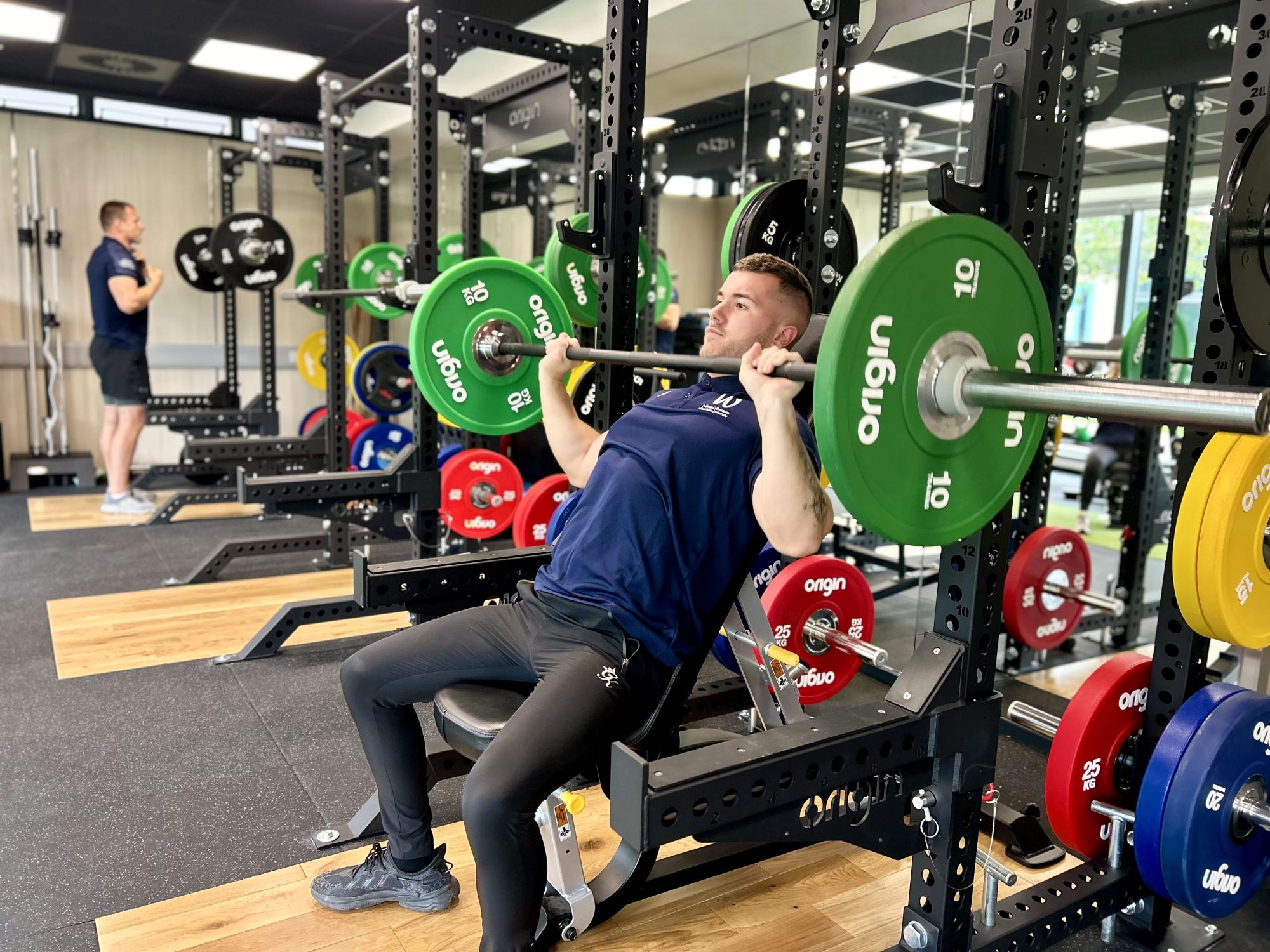
- Study in our other state of the art performance laboratories including our new Environmental Stress Laboratory used to assess performance at high altitudes
- Have access to our fully furbished dietetic kitchen
- Be taught by industry professionals who have worked and still work with elite athletes
- Learn by doing, no formal exams
- Experience sport in a thriving city full of sports enthusiasts
What you will study
Year 1, Level 4 Modules
Foundations of Anatomy and Exercise Physiology (Core) - You will explore how the human body is structured and how it functions at rest and in relation to exercise. A significant amount of time is spent in the sports science laboratory which aims to enhance your practical skills.
Introduction to Nutrition (Core) - This module will support you to develop knowledge of the importance of nutrition to human health and performance introducing key concepts.
Human Behaviour in Sport (Core) - You will be introduced to the essential models and theories appropriate for understanding human behaviour in a sports setting.
Academy Discovery Within the Sport Sciences (Core) - You will investigate qualitative and quantitative approaches to researching sports science disciplines.
Nutritional Biochemistry and Cell Biology (Core) - You will be provided with a fundamental understanding of cell biology and nutritional biochemistry, including cell structure and function, enzyme activity, membrane transport, macronutrient metabolism, and the biochemical pathways involved in energy production. This will develop the knowledge required to explain how these processes underpin cellular function, human health, and exercise performance, providing a foundation for the study and application of sports nutrition.
Foundations of Food Science (Core) - You will develop knowledge and practical skills in food science and technology, receiving additional certification for the FAA Level 2 Award in Food Safety in Catering (QCF).
Year 2, Level 5 Modules
Population and Public Health Nutrition (Core) - You will be supported to critically analyse the role of nutrition in population and public health policy.
Physiological Responses to Training and Testing (Core) - This module looks at how we can test athletes to evaluate performance after different training modalities and develops skills in designing and running experiments related to supplement use.
Sport Research Methodologies: From Research to Practice (Core) - This module aims to educate you on carrying out research from both a qualitative and quantitative perspective. You will gain insight into different research methods and analyses whilst also starting to create an idea for their final year dissertation.
Food Nutrition and Behaviour (Core) - You will develop an understanding of the bio-psycho-social underpinnings of eating behaviours and approaches to psychological interventions
Nutritional Diagnostics for Athletes (Core) - This module develops your knowledge and practical skills in the assessment of nutritional status and dietary intake within healthy and physically active populations. You will learn to use a range of nutritional assessment techniques, interpret anthropometric, dietary and physiological data, and evaluate nutritional needs using current evidence.
Tomorrow's Practitioner – the Sport and Exercise Industry (Core) – the Sport and Exercise Industry (Core) - You will gain valuable work experience within a sport and exercise setting of your choice. Develop personal and professional skills relevant for future employment.
Year 3, Level 6 Modules
Medical Nutrition Therapy (Core) - Apply advanced nutritional knowledge to the prevention and management of disease, while recognising the sports nutrition practitioner's scope of practice and the importance of multidisciplinary working. The module will prepare you to understand how medical conditions influence nutritional requirements and exercise participation.
Athlete Performance Physiology (Core) - Explore the physiological and endocrine mechanisms that underpin athletic performance and adaptation to training. You will examine the interactions between nutrition, hormones, metabolism, and exercise to evaluate how dietary strategies can optimise performance, recovery, and long-term athlete health.
Performance Nutrition for Athletes (Core) - Develops your ability to apply advanced sports nutrition principles to optimise athletic performance, recovery, adaptation, and long-term athlete health. Building on the nutritional assessment skills developed in Level 5, you will critically evaluate athlete needs, interpret performance and nutritional data, and design evidence-based nutrition strategies tailored to the demands of different sports, training phases, and competitive environments.
Sports Nutrition in the Digital Era (Core) - Explores the impact of the digital landscape on sports nutrition knowledge, practice, and athlete behaviour. You will critically evaluate nutrition information disseminated through social media, digital platforms, artificial intelligence, and commercial marketing, distinguishing evidence-based practice from misinformation.
Independent Discovery (Core) - This module allows you to conduct a research study of your own. After selecting an environment of your choice, you will collect, analyse, and interpret data from within it, turning all this hard work into a structured written format for submission.
Placement Year Modules
Professional Practice in Sports Nutrition (Core) - Provides you with the opportunity to undertake an extended industry placement, applying academic knowledge and practical skills within a professional setting.
The information listed in this section is an overview of the academic content of the programme that will take the form of either core or option modules. Modules are designated as core or option in accordance with professional body requirements and internal academic framework review, so may be subject to change.
Entry requirements & applying
- A science, maths and sports background are an advantage, but not essential.
- Level 5 leaving certification IQQ.
- If students have been out of education for >5 years or do not have a science, maths or sports background they must submit a personal statement to the programme team even if they have the required UCAS points.
Teaching & Assessment
The programme adopts a blended and student-centred approach to learning, combining theoretical knowledge with practical application to develop graduates who are scientifically informed, professionally competent, and employability focused. Teaching methods include lectures, seminars, laboratory practicals, workshops, tutorials, case-based learning, and industry-informed activities that encourage students to apply scientific principles to real-world sports nutrition scenarios.
Throughout the programme, students will engage in practical experiences such as nutritional assessment, physiological testing, dietary analysis, laboratory investigations, and the design of evidence-based nutrition strategies. Learning is further supported through digital technologies, independent study, collaborative group work, and opportunities for work-based learning and professional placement, enabling students to develop critical thinking, communication, reflective practice, and problem-solving skills. As students progress through the programme, increasing emphasis is placed on independent learning, research, and the integration of multidisciplinary knowledge, culminating in the completion of an independent dissertation and the application of advanced sports nutrition practice.
Assessment
Assessment throughout the programme is designed to reflect the knowledge, skills, and professional practice expected of sports nutrition graduates. Students will complete a range of applied assessments that mirror real-world practice, including nutritional consultations, case studies, laboratory reports, dietary analyses, research projects, presentations, reflective portfolios, and the design of evidence-based nutrition strategies for athletes and physically active individuals.
As students progress through the programme, assessments become increasingly independent and professionally focused, encouraging them to apply scientific evidence to practical scenarios, critically evaluate information, and communicate effectively with different audiences. Opportunities for reflection, collaboration, and industry engagement are embedded throughout the programme, culminating in an independent dissertation and the application of advanced practitioner skills in preparation for graduate employment or further study.
Career prospects
Our dedicated Careers and Employability team is committed to helping you achieve your professional goals. They provide personalised advice, useful resources, and extracurricular employability events to prepare you for the job market.
Graduates of this course can pursue careers in:
- Sports Nutritionist
- Health Promotion
- Exercise Referral
- Personal Training
- Lifestyle Consultant
Additionally, you may choose to further your expertise through postgraduate studies. Explore our postgraduate courses for more information.
Fees & funding
You do not have to pay your tuition fees upfront.
The fees you pay and the support available will depend on a number of different factors. Full information can be found on our fees & finance pages. You will also find information about what your fees include in the fee FAQs.
All fees are subject to any changes in government policy, view our undergraduate fees.
Accommodation
At Wrexham University, we offer on-campus en-suite rooms within our Wrexham Student Village. These private, fully furnished spaces are conveniently located, providing easy access to campus facilities, study areas, and social spaces. Plus, you’re just a 10-minute walk from the city centre!
With all bills included, free Wi-Fi, 24/7 security, and large social areas, you’ll find everything you need for a great student experience.
Explore our student accommodation options to find your perfect home away from home.
Subject to validation
Courses shown as “subject to validation” are new courses which are in development and the details of these courses are in the process of being finalised through the approval cycle, known as the ‘validation’ process. As soon as the programmes are validated the details of the course will be confirmed. The majority of new courses that are still ‘subject to validation’ are approved by the validation process; however, this is not guaranteed and should the course not go ahead as planned, or be significantly amended, you will be informed by the university and assistance will be provided to those who have been offered a place to find a suitable alternative course either at Wrexham University or at another provider.
Ready to apply?
Apply Link Accordions
Content Accordions
Don't Miss Out on Visiting Us.
Whether you have applied through Clearing or you're considering applying, you can still join us at our next Open Day. Meet our academics, chat with current students and explore our campus. This is your chance to picture your future here.