Open House for Research | July 2026
From football to virtual reality: Discovering research that makes a difference
What do football foundations, doctoral writing retreats and virtual reality in schools have in common? They were some of the fascinating topics explored at a recent Open House for Research at Wrexham University.
Chaired by Professor Mandy Robbins, the session highlighted how research across the University is helping to address real-world challenges and improve lives in our communities.
Our first speaker, Sara Hilton, joined us via a pre-recorded video after being unable to attend in person. Sara's research shines a light on the work of football foundations, such as the Wrexham AFC Foundation. While many people know these organisations for their links to football clubs, they also deliver a wide range of community programmes, including employability support, health initiatives, and projects that promote social inclusion.
Sara's work explores how football foundations make the decisions that shape these activities. Where should funding be invested? How do organisations balance the expectations of funders, communities, and partner organisations? And how do they remain financially sustainable while staying true to their social mission? Drawing on the work of sociologist Pierre Bourdieu, the research provides a valuable insight into what it takes to run a modern football foundation.
Next, Nikki Ewing shared her work on supporting doctoral researchers through peer support and dedicated writing retreats. As part of her Doctor of Education (EdD), Nikki is exploring the motivations of women undertaking doctoral study and the importance of building supportive research communities.
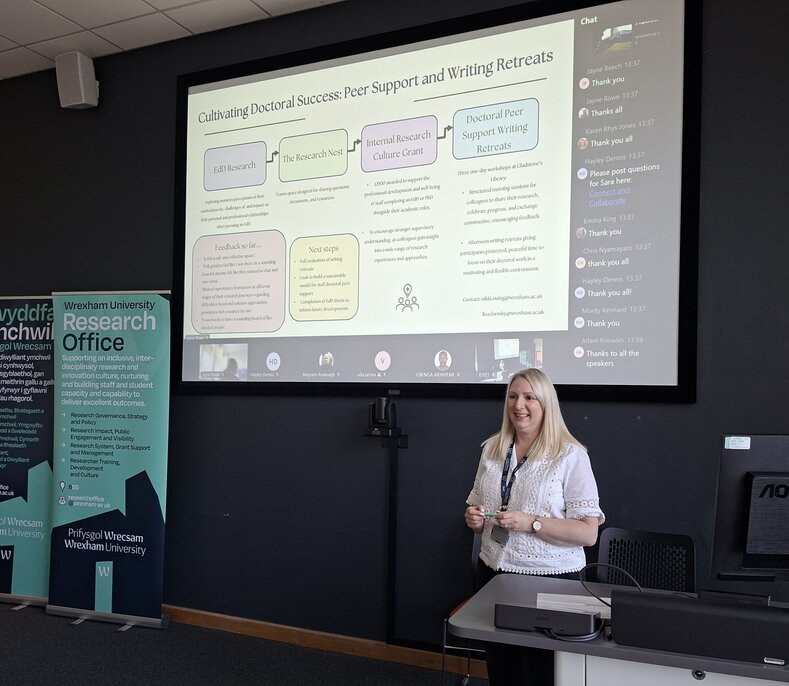
With funding from an Internal Research Culture Grant, Nikki has introduced structured writing retreats that combine development sessions with dedicated writing time, giving participants "protected, peaceful time to focus". The initiative has already received positive feedback, with participants highlighting the benefits of having space to write alongside others and offering ideas for how the programme could continue to grow.
The final presentation came from Monty Kennard, who is exploring how extended reality (XR) technologies can help create more inclusive schools. Rather than asking what the technology can do, the research begins by asking what schools and young people actually need. Following a scoping review, the project works directly with young people through workshops and co-production activities to explore how XR can support identity, belonging and wellbeing.
The research demonstrates that successful outcomes come from thoughtful design rather than the technology itself. By listening to young people and respecting the language they use to describe their experiences, the project creates opportunities for meaningful conversations around sensitive topics.
From strengthening communities through sport to supporting doctoral researchers and developing more inclusive educational experiences, these projects showcase the breadth of research taking place at Wrexham University and its potential to make a lasting difference.
Open House for Research continues to bring together researchers, professional staff, and students to spark conversations and celebrate research that has a real impact beyond the University.