BSc (Hons) Biomedical Science (with Foundation Year)
.jpg)
Course details
UCAS Code
BSFY
Year of entry
Sept 2027
Duration
4 YRS (FT)
UCAS Tariff
48-72
Institution Code
G53
Location
Wrexham
Why choose this course?
Our BSc Biomedical Science degree is designed in collaboration with Betsi Cadwaldr University Health Board (BCUHB) – NHS Wales. Hence, the course will be delivered by university academics and hospital-based biomedical scientists.
You will:
- Study a course accredited by the Institute of Biomedical Science (IBMS) and be able to register for student membership with IBMS upon registration of the course
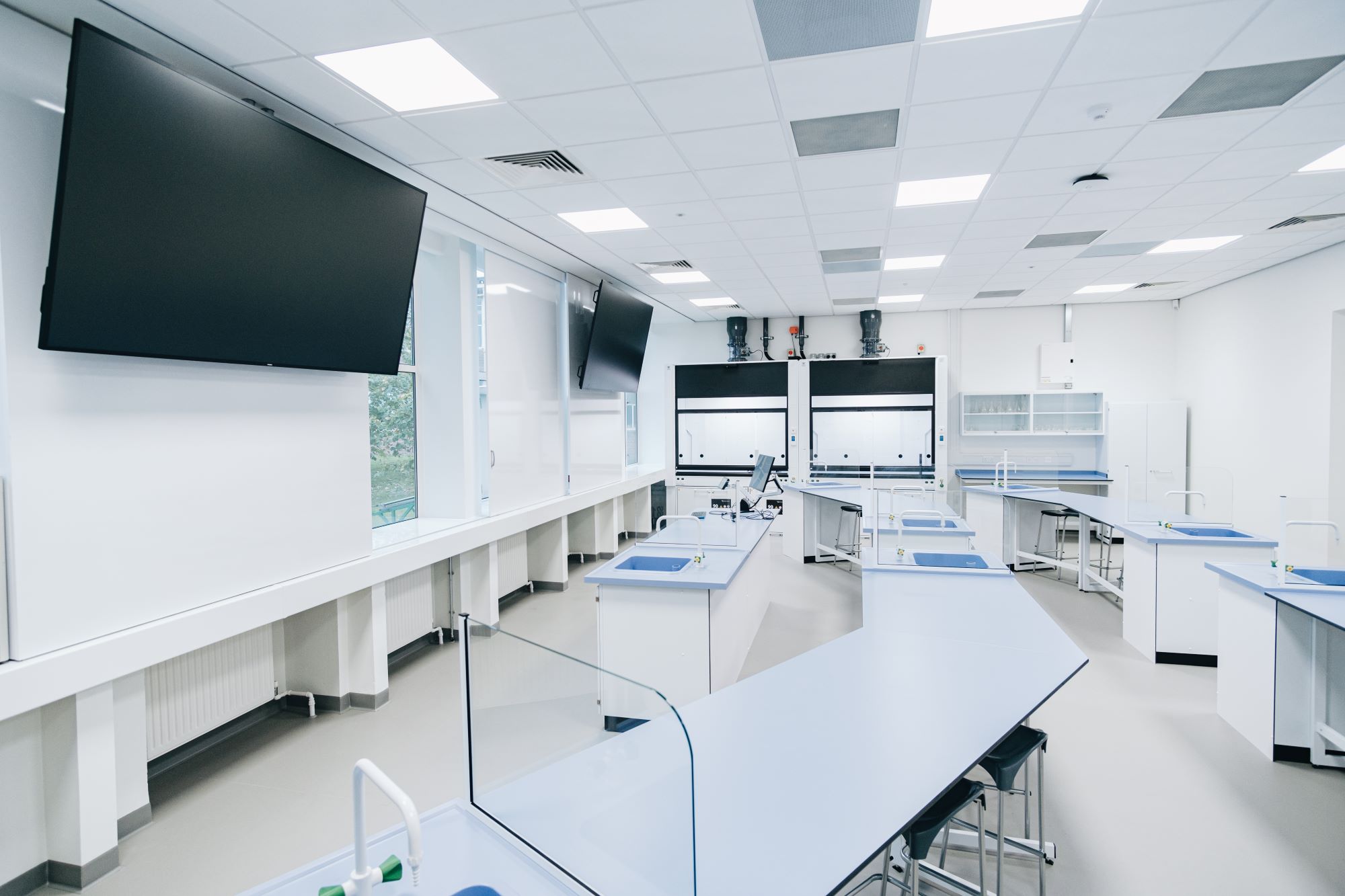
- Have access to new, highly specialised facilities based both within the university and local research centres and clinical laboratories
- Have an authentic and contemporary education within real biomedical settings embedded throughout the course
- Utilise local research laboratories, housing state-of-the-art equipment, such as flow cytometry, fluorescence microscopy and molecular analysers
- Be taught by a highly experienced team of biomedical scientists, clinicians, clinical scientists, academics, and other health professionals with a range of subject and research expertise, many of whom are engaged in national networks, external peer review and consultancy within the general fields of biomedical sciences, medicine and healthcare

Key course features
- Gain hands-on experience with laboratory investigations using both basic and advanced biomedical techniques.
- Stay ahead of the curve with a curriculum shaped by local employers and NHS laboratories to reflect the latest in biomedical science.
- Prepare for professional success with the Institute of Biomedical Science (IBMS) Certificate of Competence, required for HCPC registration.
- Develop versatile skills that open doors to careers in biomedical science, management, finance, and beyond.
- Benefit from a unique curriculum that combines broad knowledge with specialised content to suit diverse learning needs.
- Lead your own research with a final-year project in an area that sparks your personal interest.
- Learn in an inclusive, supportive environment, with tutorial help available in Welsh.
What you will study
YEAR 0 (FOUNDATION YEAR)
The Foundation Year is an integrated year where you will study core modules with a broad range of students from across the Faculty of Social and Life Sciences, giving you access to different perspectives and networking opportunities.
The modules will equip you with key skills needed for Higher Education and beyond. They will give you the chance to explore your subject area and available careers, allowing you to adapt your reading and assessments to be relevant to your degree pathway.
Alongside teaching from the broader faculty staff, you will be able to meet with staff and other students from your main degree pathway and get involved with events and opportunities that they are running.
- Study Skills for Success (Core): This module will provide a solid foundation in academic conventions and time management skills to help you to progress through your degree.
- Resilience in Higher Education and Beyond (Core): Personal development and resilience are as important as academic skills in the accomplishment on your journey towards graduation, and this exciting module will equip you with the attributes needed for this.
- A Day in the Life (Core): This module allows you to explore the potential career options open to you on completion of your chosen degree. You will be exploring the professions linked to your degree and start preparing your graduate portfolio for employers.
- Life and Work in the Welsh Context (Core): This module will give you the opportunity to explore your subject area and/or desired career in relation to living and working in today’s Wales.
- Maths and Experimental Design (Core): If your degree pathway requires an understanding of numeracy and sciences, then this module is designed to provide the opportunity to achieve that.
- Welsh for First Time Learners (Optional): This module provides an introduction to the Welsh language for those taking their first steps.
- Numeracy (Optional): If your degree requires a competent level of numeracy, you may be advised to choose this option.
- Professional Communication in the Workplace (Optional): In this module, you will begin to develop the skills and aptitude necessary to communicate effectively in a professional context.
YEAR 1 (LEVEL 4)
In year two, we will provide you with a solid foundation and introduction to the broad disciplines that underpin the subject of biomedical science, resulting in a strong understanding of the subject.
MODULES
- Professional Practice for the Biomedical and Life Sciences: This module aims to introduce you to the theoretical, practical and professional aspects of the Biomedical and Life Sciences.
- Maths and Statistics for Science: This module will bring you up to the required mathematical level for university science programmes. Examples will also be given on the applications of maths and statistics in forensic science, biochemistry and biomedical science.
- Health, Wellbeing and the Body: This module aims to develop your understanding of the normal physiological functioning of the main body systems, and the maintenance of homeostasis in healthy individuals.
- Cell Biology, Biochemistry and Genetics: This module will introduce you to laboratory techniques used for the study of cell biology, biochemistry and genetics, including microscopy, protein assays, DNA extraction, PCR and gel electrophoresis.
- Essential skills for the Life Sciences: You will be introduced to key methods in qualitative and quantitative analysis and taught contamination avoidance procedures
- Introduction to Immunology and Microbiology: This module will equip you with core knowledge in the fields of microbiology and immunology. You will carry out practical work in microbiology and pathology laboratories in a safe and professional manner.
YEAR 2 (LEVEL 5)
Year three of the course largely comprises specialist modules to give you the necessary knowledge in key areas of biomedical science. You will also be introduced to research methodology and will have the opportunity to design and carry out a mini project, preparing you for the final year project.
MODULES
- Advanced Laboratory Skills for the Biomedical and Life Sciences: This module will introduce you to advanced biomedical and life science laboratory techniques, to develop an understanding of regulatory issues, health and safety, and the application of academic knowledge in a pathology laboratory context.
- Cell and Molecular Biology: The module aims to develop further knowledge and understanding of cell and molecular biology that builds on the anatomy, physiology and cell biology learnt at level 4.
- Blood Sciences: This module aims to focus on clinical and current research topics in hematology and clinical biochemistry (blood sciences).
- Cellular and Histopathology: This module aims to focus on clinical and current research topics in cytology and histopathology.
- Applied and Medical Microbiology: This module will develop your skills and knowledge in microbiology.
- Research Methods: This module is intended to develop your understanding of what is required in academic research and provide support in preparing you for your dissertation.
YEAR 3 (LEVEL 6)
The final year of study focusses upon topics at the forefront of current research in biomedical science and will further develop your critical and analytical skills. A significant part of the final year is a 40-credit research project in which you will carry out an independent piece of research in an area of special interest to you.
MODULES
- Research Project: The aim of this module is to develop your skills in practical research and research methods in preparation for postgraduate study/graduate level employment.
- Biology of Disease: This module provides an overview of the concept of disease within the context of the normal physiological mechanisms. The module will explore pathophysiology of common conditions, beginning with a critical understanding of the pathological mechanisms of selected tissues, organs and organ systems and related pharmacology.
- Clinical Genetics and Cancer Biology: This module will focus on clinical and current research topics in genetics and cancer biology.
- Infectious Disease, Immunity and Inflammation: This module aims to provide you with a detailed understanding of infectious disease, immunity and inflammation in a clinical setting.
- Advances in Medicine - Diagnostics and Therapeutics: This module aims to provide an insight to current diagnostics and therapeutics in a clinical setting.
The information listed in this section is an overview of the academic content of the programme that will take the form of either core or option modules. Modules are designated as core or option in accordance with professional body requirements and internal academic framework review, so may be subject to change.
Entry requirements & applying
The academic requirements for the course are 48-72 UCAS tariff points at GCE A-level or equivalent
Teaching & Assessment
There will be a variety of learning and teaching techniques which include lectures, seminars, workshops, practical sessions and lab-based study, discussions, debates, group tutorials, case studies, problem-based learning, and visiting speakers.
The course is constructed on a modular basis such that you will study three modules within each semester. Each module equates to 200 hours of study of which there is 24 -36 hours of contact time, with the rest of the time being dedicated to directed study. Contact time decreases from 36 hours per module at level 4 to 24 hours at level 6, in line with the expectation that you will progress steadily towards becoming an independent learner as you progress through the course.
Assessment methods may include learning journals, group projects, portfolios, coursework, literature reviews, oral and poster presentations, case studies and laboratory reports, and exams/in-class tests. Each module is assessed by a variety of methods, enabling students to display their full potential. A research project will form one of the final parts of your assessment. Most assignments will involve electronic submission.
Teaching & Learning
We offer workshops and support sessions in areas such as academic writing, effective note-making and preparing for assignments.
Students can book appointments with academic skills tutors dedicated to helping deal with the practicalities of university work. Our student support section has more information on the help available.
In terms of particular needs, the University’s Inclusion Services can provide appropriate guidance and support should any students require reasonable adjustments to be made because of a recognised prevailing disability, medical condition, or specific learning difference.
Career prospects
Graduates of this course can pursue careers in:
- Biomedical Scientist: Conduct laboratory tests to support diagnosis and treatment of disease.
- Biotechnologist: Use biochemistry and genetics to develop and improve products.
- Microbiologist: Study and control disease-causing microorganisms.
- Medicinal Chemist: Create new and effective medicines.
- Medical Sales Specialist: Promote and sell pharmaceutical drugs and medical equipment.
- Food Technologist: Develop and produce food and drink products; often requires degrees in biochemistry, biomedical science, nutrition, microbiology, or chemistry.
- Health Care Support Worker (HCSW): Provide care and support to patients across different healthcare settings.
- Academic Research Scientist: Plan and lead experiments and investigations in cutting-edge science.
- Teaching: Deliver scientific knowledge in educational settings.
- Forensic Scientist: Use analytical and scientific techniques to examine evidence from crimes.
- Transferable Careers: Opportunities in management, healthcare administration, finance, and other roles, thanks to broad skills developed during the course.
Qualifications:
This course provides preparation for undertaking the Institute of Biomedical Science Certificate of Competence (a compulsory requirement for being a registered Biomedical Scientist affiliated with the Health & Care Professions Council).
It prepares students wishing to undertake a career in research, teaching, medicine, dentistry or to pursue studies towards our MSc Biomedical Science degree, a PhD or Postgraduate Certificate in Education (PGCE).
Completion of this degree will also ensure employment opportunities outside of immediate biomedical science areas such as management and finance roles.
The BSc (Hons) Biomedical Science course is relevant and employer ready, utilising a partnership between Wrexham University and the Betsi Cadwaldr University Health Board (BCUHB). It is accredited by the Institute of Biomedical Sciences (IBMS). It is taught by an experienced team of academics, biomedical scientists and other health professionals with a range of subject and research expertise.
IBMS degree accreditation ensures that a degree course covers the academic components of the standards of proficiency at the required level, so we meet the Health and Care Profession Council (HCPC) standards of proficiency for biomedical scientists. Students also receive a wide-ranging, research-informed scientific education and develop practical skills and experience that employers value.
Our dedicated Careers and Employability team is committed to helping you achieve your professional goals. They provide personalised advice, useful resources, and extracurricular employability events to prepare you for the job market.
Fees & funding
You do not have to pay your tuition fees upfront.
The fees you pay and the support available will depend on a number of different factors. Full information can be found on our fees & finance pages. You will also find information about what your fees include in the fee FAQs.
All fees are subject to any changes in government policy, view our undergraduate fees.
Accommodation
At Wrexham University, we offer on-campus en-suite rooms within our Wrexham Student Village. These private, fully furnished spaces are conveniently located, providing easy access to campus facilities, study areas, and social spaces. Plus, you’re just a 10-minute walk from the city centre!
With all bills included, free Wi-Fi, 24/7 security, and large social areas, you’ll find everything you need for a great student experience.
Explore our student accommodation options to find your perfect home away from home.
Ready to apply?
Apply Link Accordions
Content Accordions
Don't Miss Out on Visiting Us.
Whether you have applied through Clearing or you're considering applying, you can still join us at our next Open Day. Meet our academics, chat with current students and explore our campus. This is your chance to picture your future here.