.jpg)
Publication of the Month, August 2026
From Concept to Classroom: Transforming Forensic Taphonomy Education with ‘Decompanion’
August 2026
The Research Office pick for August is a new paper in Science & Justice, by Dr Paige Tynan and Amy Rattenbury.
This paper examines “Decompanion”, an open-access digital platform designed to transform forensic taphonomy education (the study of decomposition and postmortem processes). This field can struggle with fundamental challenges, such as students learning from static images and infrequent demonstrations, while the reality of decomposition involves complex, interacting variables that are difficult to capture in traditional classroom settings
The Decompanion platform addresses critical educational challenges in forensic science, including limited access to human decomposition facilities, reliance on animal models, and inconsistent teaching methodologies. It supports experiential learning through virtual laboratories, develops data literacy through structured databases, and integrates ethical considerations into forensic education. Decompanion is not a replacement for hands-on training, but a crucial supplement that bridges gaps in accessibility and resources.
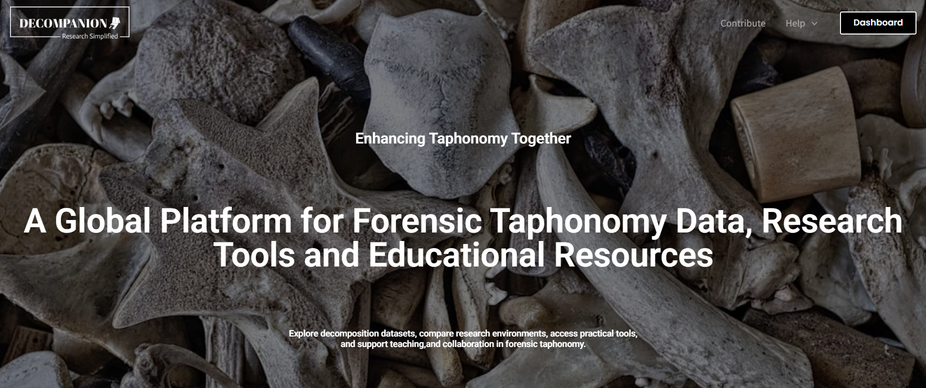
Key Features of Decompanion
- Interactive 3D models using photogrammetry
- Global research facility mapping and decomposition calculators
- Structured database with standardised metadata
- Web accessibility compliance (WCAG 2.1 Level AA)
Future Directions
Integration with machine learning for post-mortem interval estimation and continued expansion based on user feedback. The platform aims to bridge gaps between research and teaching while addressing ethical constraints in decomposition studies.
Read the full paper.